
What Happens During a Hearing Test? An ENT in Gangnam, Seoul Explains
Answered by Dr. Kim Yoo Suk, MD · Board-certified otolaryngologist · Former professor, Yonsei & Ajou University · Consultations in English
SHORT ANSWER
A standard hearing test is painless and usually takes about 20 to 30 minutes. You listen to tones through headphones in a quiet booth and press a button when you hear them, repeat words for speech testing, and may have tympanometry to measure eardrum movement. Results show the type and degree of any hearing loss.
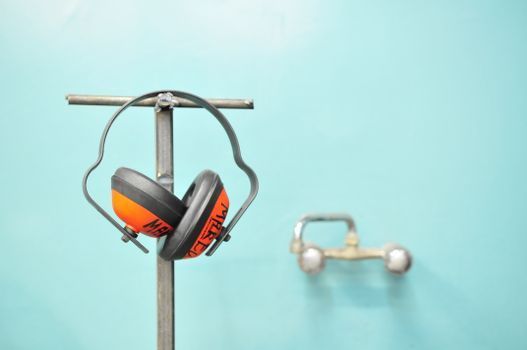
A simple, painless series of tests
A hearing test (audiometry) measures how well each ear hears different pitches and how clearly you understand speech. Combined with an ear examination, it tells the doctor whether hearing loss is present, how severe it is, and whether the problem lies in the outer or middle ear (conductive) or the inner ear and nerve (sensorineural).
Step by step
1. Ear examination
The doctor looks in the ear canal and at the eardrum to check for wax, infection, fluid, or a perforation. Wax may be removed first so it does not affect results.
2. Pure-tone audiometry
You sit in a soundproof booth wearing headphones. Beeps of different pitches and volumes are played to one ear at a time. You press a button or raise your hand each time you hear one, even if it is very faint. A small bone conduction headset placed behind the ear then tests the inner ear directly. The results are plotted on a chart called an audiogram.
3. Speech audiometry
You listen to words at different volumes and repeat them. This measures how well you understand speech, which matters for daily life and hearing aid decisions.
4. Tympanometry
Tympanometry uses a soft probe in the ear canal that gently changes air pressure for a few seconds. It shows how well the eardrum moves and detects fluid behind it, negative pressure, or a perforation.
Understanding your results
- Normal hearing: you hear quiet tones across the range tested
- Conductive loss: sound is blocked before it reaches the inner ear, from wax, fluid, or eardrum problems; often treatable
- Sensorineural loss: inner ear or nerve damage, such as age-related, noise-induced, or sudden hearing loss
- Mixed loss: a combination of both
Severity ranges from mild to profound. Certain patterns, such as a dip at high frequencies, suggest noise damage.
Who should have a hearing test
- Anyone with sudden hearing loss, which is urgent
- People with persistent tinnitus or ear fullness
- Those who struggle to follow conversation in noisy restaurants or meetings
- People exposed to loud noise at work or as musicians
- Patients with dizziness, to assess inner ear involvement
- Older adults noticing gradual change, see age-related hearing loss
Tips to prepare
- Avoid loud noise for about 12 to 24 hours beforehand if possible
- Let staff know if you have a cold, as congestion can affect results
- Bring any previous audiograms for comparison
What we do at Gangnam Yonsei ENT
At our clinic, the hearing test is interpreted directly by Dr. Kim Yoo Suk, a board-certified otolaryngologist and former assistant professor at Ajou University School of Medicine, who explains the audiogram in English and links the results to your symptoms. Depending on findings, the next step might be wax removal, treatment of middle ear fluid, urgent steroid treatment for sudden loss, hearing aid discussion, or further imaging.
Copies of your results and medical records can be provided for insurance claims or for doctors abroad. See location and hours. Related: whether you need hearing aids and sudden hearing loss.
Related questions
Is a hearing test painful?
No. Hearing tests are completely painless. You simply listen to sounds through headphones and respond. Tympanometry involves a soft probe and a brief pressure change in the ear canal, which some people notice but do not find painful.
How long does a hearing test take?
A standard hearing test with pure-tone and speech audiometry plus tympanometry usually takes about 20 to 30 minutes. Additional time is spent with the doctor reviewing the results and discussing next steps.
Can I get a hearing test without hearing loss symptoms?
Yes. Baseline testing is useful for musicians, people exposed to workplace noise, and adults wanting to monitor their hearing over time. Having a previous audiogram makes future changes easier to detect.
Your doctor
Dr. Kim Yoo Suk, MD
Board-certified otolaryngologist (ENT). Former clinical assistant professor at Yonsei University and assistant professor at Ajou University School of Medicine. Nose & sinus subspecialist who treats all ear, nose and throat conditions.
Consultations in English. Guide for international patients →
Visit us in Gangnam
2F HS Tower, 703 Seolleung-ro, Gangnam-gu, Seoul
Gangnam-gu Office Station (Line 7 / Suin-Bundang), Exit 3-1
Mon, Tue, Thu, Fri 9:00–19:00
Wed 14:00–19:00 · Sat 9:00–14:00
Closed Sundays & public holidays
This answer is general medical information written and reviewed by an ENT specialist. It is not a diagnosis. Please see a doctor for an examination. In an emergency in Korea, call 119.