
What Is the Difference Between Turbinate Reduction and Septoplasty in Gangnam, Seoul?
Answered by Dr. Kim Yoo Suk, MD · Board-certified otolaryngologist · Former professor, Yonsei & Ajou University · Consultations in English
SHORT ANSWER
Septoplasty straightens a deviated septum, the central wall of the nose, while turbinate reduction shrinks swollen turbinates, the ridges on the side walls. Both treat nasal obstruction but fix different structures. At Gangnam Yonsei ENT Clinic both are done under local anesthesia, and they are often combined when both problems contribute to blockage.
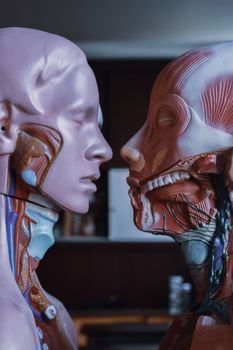
Two different structures, one shared goal
Nasal obstruction can come from the middle of the nose, the sides, or both. Understanding the anatomy makes the choice clearer:
- The septum is the wall of cartilage and bone dividing the left and right nasal passages. When it is bent, called a deviated septum, it narrows one or both sides.
- The turbinates are scroll-shaped structures on the side walls that warm and humidify air. When their lining stays swollen, as in hypertrophic rhinitis or allergic rhinitis, they block airflow.
Side-by-side comparison at our clinic
Septoplasty
- Fixes: a structurally deviated septum
- Typical reasons: one-sided or fixed blockage, snoring, sleep apnea contribution
- Anesthesia and time: local, 20–30 minutes
- Packing: both sides for one day
- Recovery: protect the nose for two weeks; absorbable sutures dissolve in two to three weeks
Turbinate reduction
- Fixes: enlarged inferior turbinates
- Typical reasons: chronic congestion, allergic or hypertrophic rhinitis, snoring, sleep apnea
- Anesthesia and time: local, 15–20 minutes
- Packing: none
- Recovery: avoid strenuous exercise, nose blowing and sauna for one week; crusting about two weeks, with weekly follow-up dressing
Clues to which problem you have
- Blockage that stays on the same side all the time suggests a septal deviation.
- Blockage that alternates sides or worsens lying down suggests turbinate swelling.
- Good response to a decongestant spray suggests swollen turbinate lining rather than fixed bone or cartilage.
These are only clues. An examination is needed to confirm.
Why they are often combined
A deviated septum frequently comes with enlargement of the turbinate on the opposite, wider side, as the nose compensates for the space. Correcting the septum alone may leave that side blocked by the turbinate. Combining both procedures in one session addresses both causes with a single recovery period.
What we do at Gangnam Yonsei ENT
Dr. Kim Yoo Suk is a board-certified otolaryngologist whose academic subspecialty at Yonsei and Ajou Universities was rhinology, including septoplasty and rhinitis surgery. He examines the nose with nasal endoscopy before and after decongestant spray and, when needed, a CT scan, to see which structures are responsible.
Medical treatment comes first, especially for turbinate swelling caused by allergies: steroid sprays, antihistamines or immunotherapy. Surgery is recommended only when obstruction persists despite appropriate care. Explanations are in English, and the same-day system allows testing, consultation and surgery on one day when suitable.
Read the full pages on septoplasty and turbinate reduction, or the nasal and sinus surgery center overview. International patients can find practical visit details in our English-speaking ENT guide.
Where snoring and sleep apnea fit in
Both procedures can be part of treatment for snoring or sleep apnea when nasal blockage contributes, because a clearer nose reduces mouth breathing and can make CPAP easier to tolerate. However, snoring often has several sources, including the soft palate and tongue base, so nasal surgery alone may not resolve it. A full airway evaluation helps set realistic goals.
Honest limitations
Neither operation cures allergies. Turbinate tissue can partially regrow over time, and allergy control remains important. Septoplasty does not change the outer shape of the nose. Dr. Kim explains what each procedure can realistically achieve for you.
See also septoplasty recovery time.
Related questions
Which surgery has the easier recovery?
Turbinate reduction is usually easier: it takes 15 to 20 minutes and needs no packing. Septoplasty involves one day of packing and two weeks of protecting the nose. Both are done under local anesthesia with same-day discharge for most patients.
Can turbinate reduction help allergic rhinitis?
It can relieve congestion from swollen turbinates when medication is not enough, but it does not cure the allergy itself. Sneezing and itching may continue, so allergy treatment such as sprays or immunotherapy usually remains part of the plan.
Will septoplasty change how my nose looks?
Septoplasty works inside the nose to improve breathing and does not aim to change the outer appearance. If you are concerned about external shape as well, discuss this with Dr. Kim so expectations are clear before surgery.
Your doctor
Dr. Kim Yoo Suk, MD
Board-certified otolaryngologist (ENT). Former clinical assistant professor at Yonsei University and assistant professor at Ajou University School of Medicine. Nose & sinus subspecialist who treats all ear, nose and throat conditions.
Consultations in English. Guide for international patients →
Visit us in Gangnam
2F HS Tower, 703 Seolleung-ro, Gangnam-gu, Seoul
Gangnam-gu Office Station (Line 7 / Suin-Bundang), Exit 3-1
Mon, Tue, Thu, Fri 9:00–19:00
Wed 14:00–19:00 · Sat 9:00–14:00
Closed Sundays & public holidays
This answer is general medical information written and reviewed by an ENT specialist. It is not a diagnosis. Please see a doctor for an examination. In an emergency in Korea, call 119.