
Prescriptions and Pharmacies in Korea: A Guide for Foreign Patients in Gangnam, Seoul
🌍 Welcoming patients from around the world · Consultations in English with Dr. Kim Yoo Suk, MD, former professor at Yonsei & Ajou University
IN SHORT
In Korea, doctors issue a prescription that you take to a separate pharmacy, which dispenses the medicine. Prescriptions are usually valid for only a few days, so fill them soon after your visit. Many medicines, including antibiotics, need a prescription. Bring a list of your regular medications by generic name to help the doctor and pharmacist.
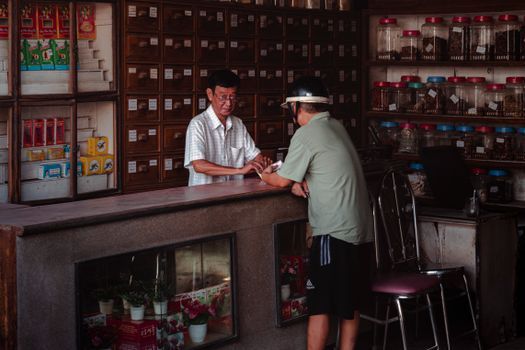
The separation of clinics and pharmacies
Korea separates prescribing from dispensing. After your consultation at an outpatient clinic, you receive a printed prescription, and you take it to a pharmacy (약국, yakguk) to collect the medicine. Clinics do not usually hand out medicines themselves. Most clinic buildings in Seoul have a pharmacy nearby, often on the ground floor or across the street.
Step by step: filling a prescription
- Get your prescription at the clinic reception after paying.
- Go to any pharmacy soon. Prescriptions are generally valid for a short period, commonly three days, unless the doctor indicates otherwise.
- Hand it to the pharmacist with your passport or Residence Card if asked.
- Listen to instructions. Pharmacists often dispense tablets in daily sachets, one packet per dose. Ask for instructions in English or use a translation app.
- Pay and request a receipt if you plan to make an insurance claim.
Reading Korean medicine labels
Labels and sachets are usually in Korean. Useful words include 아침 (morning), 점심 (lunch), 저녁 (evening), 식후 (after meals) and 식전 (before meals). Taking a photo of the instructions and using a translation app works well. Ask the pharmacist to write the medicine names if you want to look them up.
What needs a prescription
Antibiotics, oral steroids, most strong antihistamines and many stomach and reflux medicines need a prescription in Korea. Pharmacies sell over-the-counter products such as basic pain relievers, cold remedies and saline sprays, and some convenience stores stock a small range of common medicines. Over-the-counter brand names differ from home, so ask the pharmacist for the active ingredient you know, such as acetaminophen or ibuprofen, rather than a brand name. Pharmacists in Gangnam are used to foreign customers, and many can explain dosing in simple English or with gestures and written notes.
ENT medicines you may be prescribed
- Nasal steroid sprays and antihistamines for allergic rhinitis; see allergic rhinitis medication.
- Antibiotics when a bacterial sinus infection or ear infection is likely.
- Ear drops for otitis externa.
- Acid-suppressing medicines for throat reflux, often for several months.
A caution on decongestant nasal sprays: they relieve blockage quickly but can cause rebound congestion if used for more than a few days.
Bringing your own medicines
If you take regular medication, bring enough for your trip in original packaging with a copy of your prescription. Some medicines, including certain stimulants, sleeping pills and strong painkillers, are controlled in Korea and may need documentation or be restricted; check with the Korean embassy or customs before traveling. Tell Dr. Kim about all medicines and supplements so prescriptions can be checked for interactions.
Prescribing at our clinic
Dr. Kim Yoo Suk, a board-certified otolaryngologist and former Yonsei and Ajou professor, explains in English what each medicine is for and how long to take it, and he prescribes antibiotics only when the examination supports them. Learn more on our English-speaking ENT page.
For claims, see our insurance documents guide. Directions are on our location page, and the International Patients hub lists other guides.
Frequently asked questions
Can I get my medicine directly from the clinic?
Usually not. Korea separates prescribing and dispensing, so you take the prescription from the clinic to a pharmacy. There are pharmacies near the clinic. Bring the prescription soon after your visit, because it is valid only for a short period.
Can I buy antibiotics without a prescription in Korea?
No. Antibiotics require a doctor's prescription in Korea. Most colds and sore throats are viral and do not need antibiotics. If you suspect a sinus, ear or throat infection, see a doctor, who will decide whether antibiotics are appropriate.
How do I know when to take each packet?
Pharmacists often pack tablets in daily sachets marked with times, such as morning, lunch and evening, and whether to take them before or after meals. Ask the pharmacist to explain, and photograph the label to translate later if needed.
Before your visit
- Bring your passport or Alien Registration Card (ARC)
- Walk-ins and WhatsApp messages welcome: +82-10-5344-4464
- Ask for an itemized receipt, medical record copies or an English medical certificate for insurance claims
- Consultations in English
Find us in Gangnam
2F HS Tower, 703 Seolleung-ro, Gangnam-gu, Seoul
서울특별시 강남구 선릉로 703, 2층
Gangnam-gu Office Station, Exit 3-1
Mon, Tue, Thu, Fri 9:00–19:00 · Wed 14:00–19:00 · Sat 9:00–14:00
General information for international patients, reviewed by an ENT specialist. Insurance coverage and claim rules depend on your own insurer — please check with them. In an emergency in Korea, call 119.