
Nasal Spray Addiction (Rhinitis Medicamentosa) Treatment in Gangnam, Seoul
Medically reviewed by Dr. Kim Yoo Suk, MD · Board-certified otolaryngologist · Former professor, Yonsei & Ajou University · Consultations in English
QUICK ANSWER
Nasal spray overuse rhinitis, or rhinitis medicamentosa, is rebound congestion caused by using decongestant sprays such as oxymetazoline or xylometazoline for more than a few days. The nose blocks again as each dose wears off, creating dependence. Treatment involves stopping the decongestant with a supervised plan, usually supported by steroid sprays.
What is rhinitis medicamentosa?
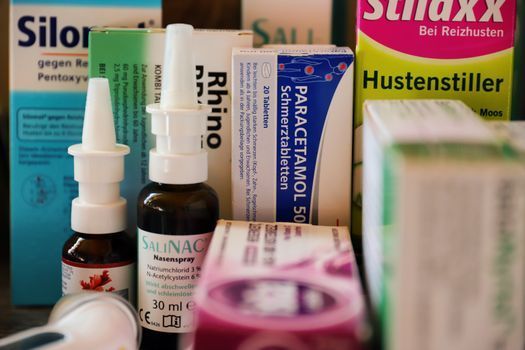
Rhinitis medicamentosa is drug-induced nasal congestion caused by prolonged use of topical decongestant sprays. These sprays, which include oxymetazoline and xylometazoline, shrink swollen nasal blood vessels within minutes. With repeated use, the vessels become less responsive and swell back more strongly when the effect wears off. The result is a cycle of rebound congestion and ever more frequent spraying.
Product labels generally advise limiting use to about three days for this reason.
Symptoms
- Constant nasal blockage that returns within hours of spraying
- Needing the spray more often, or a higher dose, to breathe
- Difficulty sleeping without the spray
- Dryness, burning or crusting inside the nose
- Nosebleeds
- Anxiety about running out of spray
Causes
The condition usually begins when someone uses a decongestant for a cold, allergy or blocked nose and continues because stopping makes the congestion worse. An underlying problem, such as allergic rhinitis, a deviated septum or enlarged turbinates, is often what led to spray use in the first place. Preservatives such as benzalkonium chloride in some sprays may contribute to mucosal irritation.
How it is diagnosed at our Gangnam clinic
The diagnosis is based on history: which spray, how often and for how long. Dr. Kim performs nasal endoscopy to see the condition of the lining, which is often red and swollen, and to identify any underlying cause such as septal deviation, turbinate hypertrophy or polyps. An allergy test may be suggested if allergy appears to be the original driver.
Treatment options
Stopping the decongestant
The essential step is to stop the decongestant spray. Approaches include:
- Stopping completely, accepting several days of significant congestion
- Stopping on one side first, then the other once the first side recovers
- Switching to a preservative-free product during weaning, if advised
Supportive treatment
- Intranasal corticosteroid sprays started immediately to calm rebound swelling
- Saline irrigation for comfort and crust clearance
- A short course of oral steroids in selected severe cases
- Elevating the head of the bed and using a humidifier
Most people notice significant improvement within one to two weeks of stopping, though full recovery of the lining can take longer.
Treating the underlying problem
Once weaned, the original cause should be addressed. If a structural issue remains, turbinate reduction surgery or septoplasty under local anesthesia may be considered so you do not return to spray dependence.
When to see an ENT
See an ENT if you have used a decongestant spray for more than a week, cannot sleep without it, or have tried and failed to stop. Seek prompt care for frequent nosebleeds, severe crusting, or a whistling sound when breathing, which can indicate septal damage.
Seeing Dr. Kim in English
Many expats arrive with sprays bought abroad. Dr. Kim Yoo Suk, a board-certified ENT and former university professor in rhinology, will review the product and design a weaning plan with you in English. Find us via location and hours.
Frequently asked questions
How long does it take to stop needing nasal spray?
The worst congestion usually lasts several days after stopping, and most people breathe noticeably better within one to two weeks, especially when using a steroid spray. Complete recovery of the nasal lining may take a few weeks longer.
Are steroid nasal sprays addictive like decongestants?
No. Steroid sprays work differently: they reduce inflammation gradually and do not cause rebound congestion. They are safe for long-term use at recommended doses and are an important tool for getting off decongestant sprays.
Can rebound congestion damage my nose permanently?
Long-term overuse can cause chronic swelling and, rarely, more serious damage to the lining or septum. Most people recover well after stopping, but persistent turbinate enlargement may need treatment. Early action makes recovery easier.
Your doctor
Dr. Kim Yoo Suk, MD
Board-certified otolaryngologist (ENT). Former clinical assistant professor at Yonsei University and assistant professor at Ajou University School of Medicine. Nose & sinus subspecialist who treats all ear, nose and throat conditions.
Consultations in English. Guide for international patients →
Visit us in Gangnam
2F HS Tower, 703 Seolleung-ro, Gangnam-gu, Seoul
Gangnam-gu Office Station (Line 7 / Suin-Bundang), Exit 3-1
Mon, Tue, Thu, Fri 9:00–19:00
Wed 14:00–19:00 · Sat 9:00–14:00
Closed Sundays & public holidays
This page is general medical information written and reviewed by an ENT specialist. It is not a diagnosis. Symptoms differ between people — please see a doctor for an examination. In an emergency in Korea, call 119.