
Can You Get Addicted to Nasal Spray? An ENT in Gangnam, Seoul Explains Rebound Congestion
Answered by Dr. Kim Yoo Suk, MD · Board-certified otolaryngologist · Former professor, Yonsei & Ajou University · Consultations in English
SHORT ANSWER
You cannot become truly addicted, but decongestant nasal sprays such as oxymetazoline or xylometazoline cause rebound congestion when used for more than about three to five days in a row. The lining swells again as each dose wears off, so you spray more often. This condition, rhinitis medicamentosa, is treatable with a supervised taper and steroid sprays.
Not addiction, but a real dependence cycle
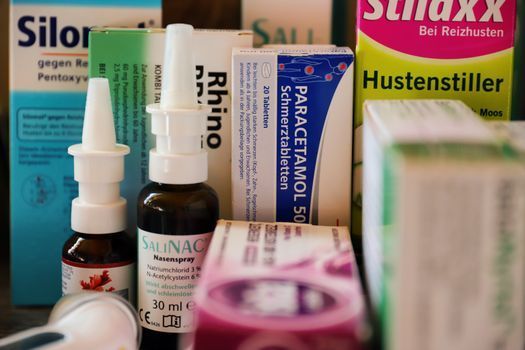
Decongestant sprays work by tightening blood vessels in the nasal lining, which shrinks swollen turbinates within minutes. With repeated use, the vessels become less responsive and rebound swelling develops as each dose wears off. The result is a cycle: congestion, spray, brief relief, worse congestion. Doctors call this nasal spray overuse rhinitis(rhinitis medicamentosa).
It is not a chemical addiction in the way nicotine is, but it can feel like one. Many people find they cannot sleep without the spray and carry a bottle everywhere.
Which sprays cause it, and which do not
- Cause rebound: decongestant sprays containing oxymetazoline, xylometazoline, naphazoline, or phenylephrine. Many over-the-counter sprays in Korea and abroad fall into this group.
- Do not cause rebound: steroid nasal sprays (such as fluticasone, mometasone, budesonide), antihistamine sprays, and saline sprays or rinses.
Check the active ingredient on the box rather than the brand name. If you are unsure, bring the bottle to your appointment.
Signs you may have rebound congestion
- You have used a decongestant spray daily for more than a week
- Relief lasts a shorter time than before
- You need to spray before sleep every night
- Your nose feels blocked on both sides without much discharge
- You feel anxious when you do not have the spray with you
How to stop safely
Stopping abruptly often causes several days of severe blockage, which is why many people restart. A more comfortable approach, usually supervised by a doctor, includes:
- Starting a steroid nasal spray to calm the underlying inflammation
- Stopping the decongestant in one nostril first, then the other a week or so later
- Using saline rinses to keep the nose clear
- Treating the original cause, such as allergies or a structural blockage
Most people notice a clear improvement within one to two weeks of stopping.
What was the original problem?
People rarely start using sprays daily for no reason. Common underlying causes include allergic rhinitis, hypertrophic rhinitis with enlarged turbinates, a deviated septum, or chronic sinusitis. If that cause is not addressed, the urge to spray returns.
What we do at Gangnam Yonsei ENT
Dr. Kim Yoo Suk, a former Yonsei clinical assistant professor whose academic subspecialty included rhinitis surgery, sees rebound congestion regularly. A nasal endoscopy shows the condition of the turbinates and whether a septal deviation or polyps are present. An allergy test may identify triggers.
Most patients succeed with a structured medical plan. If turbinates remain permanently enlarged after stopping the spray, turbinate reduction surgery under local anesthesia, typically 15 to 20 minutes without nasal packing, may be considered.
When to see an ENT
Book a visit if you have used a decongestant spray for more than two weeks, if you are pregnant or have high blood pressure and use these sprays, or if stopping causes unbearable blockage. English consultations are available near Gangnam-gu Office Station; see our English-speaking ENT guide. Related: why one nostril stays blocked and whether turbinates grow back after surgery.
Related questions
How long can I safely use a decongestant nasal spray?
Most labels and doctors advise no more than three to five consecutive days. Short use during a cold is generally safe for healthy adults. If you still need it after that, see a doctor to find and treat the underlying cause.
Is a steroid nasal spray addictive too?
No. Steroid nasal sprays work differently and do not cause rebound congestion. They take several days to reach full effect and are designed for regular, longer-term use under medical guidance for allergic and chronic rhinitis.
Can rebound congestion damage my nose permanently?
Long-term overuse can lead to chronically swollen turbinates and a dry, irritated lining. Most people recover well after stopping with medical support, but some have persistent turbinate enlargement that may benefit from turbinate reduction.
Your doctor
Dr. Kim Yoo Suk, MD
Board-certified otolaryngologist (ENT). Former clinical assistant professor at Yonsei University and assistant professor at Ajou University School of Medicine. Nose & sinus subspecialist who treats all ear, nose and throat conditions.
Consultations in English. Guide for international patients →
Visit us in Gangnam
2F HS Tower, 703 Seolleung-ro, Gangnam-gu, Seoul
Gangnam-gu Office Station (Line 7 / Suin-Bundang), Exit 3-1
Mon, Tue, Thu, Fri 9:00–19:00
Wed 14:00–19:00 · Sat 9:00–14:00
Closed Sundays & public holidays
This answer is general medical information written and reviewed by an ENT specialist. It is not a diagnosis. Please see a doctor for an examination. In an emergency in Korea, call 119.