
Allergy Testing for Rhinitis in Gangnam, Seoul
Medically reviewed by Dr. Kim Yoo Suk, MD · Board-certified otolaryngologist · Former professor, Yonsei & Ajou University · Consultations in English
QUICK ANSWER
An allergy test identifies which airborne allergens, such as house dust mites, pollen, mold or pet dander, trigger your nasal symptoms. At Gangnam Yonsei ENT in Gangnam, Seoul, testing supports guideline-based allergic rhinitis care, and Dr. Kim Yoo Suk explains the results and a treatment plan in English.
What is an allergy test?
An allergy test measures your immune system's sensitization to specific allergens. For nasal allergy, testing focuses on inhalant allergens. The two common methods are:
- Skin prick testing: tiny amounts of allergen extracts are introduced into the skin of the forearm or back, and wheals are measured after about 15 to 20 minutes.
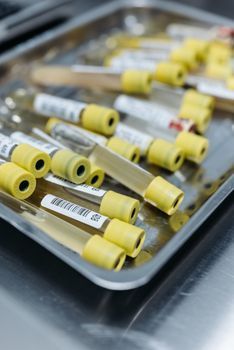
- Blood testing (specific IgE): a blood sample measures antibodies to a panel of allergens. It is unaffected by antihistamines and suits people with skin conditions.
The method used is chosen according to your situation and explained before testing.
Who is it for?
Testing is useful for people with:
- Sneezing, itching, watery runny nose or congestion suggesting allergic rhinitis
- Seasonal symptoms, or flare-ups on fine dust and yellow dust days that may coexist with allergy
- Symptoms that have changed after moving to Korea, where house dust mite and spring pollens are common triggers
- Candidates for dust mite sublingual immunotherapy, which requires confirmed sensitization
- Distinguishing allergy from vasomotor rhinitis
How it is done at our Gangnam clinic
Dr. Kim Yoo Suk is a member of the Korean Academy of Asthma, Allergy and Clinical Immunology and has published research on body mass index and histamine skin reactivity. He manages allergic rhinitis according to the ARIA (Allergic Rhinitis and its Impact on Asthma) guideline, combining allergen avoidance, medication and, when needed, surgery.
- A history of symptom timing, home environment, pets and medications.
- Nasal endoscopy to check for swollen turbinates, polyps or septal deviation.
- The appropriate allergy test.
- Interpretation linking results to your actual symptoms, because a positive test without symptoms does not require treatment.
If you are having skin testing, the clinic may ask you to stop antihistamines for several days beforehand; follow the instructions given when booking.
After the test
Skin test sites may itch for an hour or two. Results translate into a practical plan: targeted avoidance (for example, mite-proof bedding and humidity control), allergic rhinitis medication, immunotherapy, or turbinate surgery for fixed blockage.
Risks and limitations
Skin testing occasionally causes larger local swelling and, very rarely, a systemic allergic reaction, so it is performed under medical supervision. Blood tests carry only the minor risks of a blood draw. Neither test is perfect: false positives and negatives occur, and results must be interpreted alongside your history. Food allergy and drug allergy need different evaluation.
Sensitization patterns can also change over time, especially after moving to a new climate, so retesting may be reasonable years later if symptoms shift.
Practical information for foreign patients
Results and avoidance advice are explained in English, and copies can be taken home for your own doctor. The clinic is close to Gangnam-gu Office Station Exit 3-1. See the international patient guide and Dr. Kim's credentials.
Frequently asked questions
Do I need to stop antihistamines before an allergy test?
For skin prick testing, antihistamines usually need to be stopped for several days because they suppress reactions. Blood testing is not affected. Follow the clinic's specific instructions when booking, and do not stop prescribed asthma medicines without advice.
What are the most common nasal allergens in Seoul?
House dust mites are a major year-round trigger in Korea, and tree and grass pollens cause spring and autumn peaks. Pet dander and mold are also common. Testing shows which ones are relevant to you personally.
Can a positive allergy test be wrong?
A test can show sensitization without causing symptoms, and occasionally results are falsely negative. That is why Dr. Kim interprets results alongside your symptom history and examination, rather than treating test numbers alone.
Your doctor
Dr. Kim Yoo Suk, MD
Board-certified otolaryngologist (ENT). Former clinical assistant professor at Yonsei University and assistant professor at Ajou University School of Medicine. Nose & sinus subspecialist who treats all ear, nose and throat conditions.
Consultations in English. Guide for international patients →
Visit us in Gangnam
2F HS Tower, 703 Seolleung-ro, Gangnam-gu, Seoul
Gangnam-gu Office Station (Line 7 / Suin-Bundang), Exit 3-1
Mon, Tue, Thu, Fri 9:00–19:00
Wed 14:00–19:00 · Sat 9:00–14:00
Closed Sundays & public holidays
Related pages
This page is general medical information written and reviewed by an ENT specialist. It is not a diagnosis or a guarantee of results; every treatment carries risks, and suitability is decided only after an examination. In an emergency in Korea, call 119.