
Fine Dust & Yellow Dust Rhinitis Care in Gangnam Seoul
Medically reviewed by Dr. Kim Yoo Suk, MD · Board-certified otolaryngologist · Former professor, Yonsei & Ajou University · Consultations in English
QUICK ANSWER
Fine dust rhinitis is nasal irritation and inflammation caused by airborne particulate matter, such as PM2.5, PM10 and seasonal yellow dust (hwangsa) in Korea. It causes sneezing, runny or blocked nose and throat irritation, and worsens existing allergy or sinusitis. Protection includes checking air quality, wearing KF94 masks, saline rinses and treating underlying rhinitis.
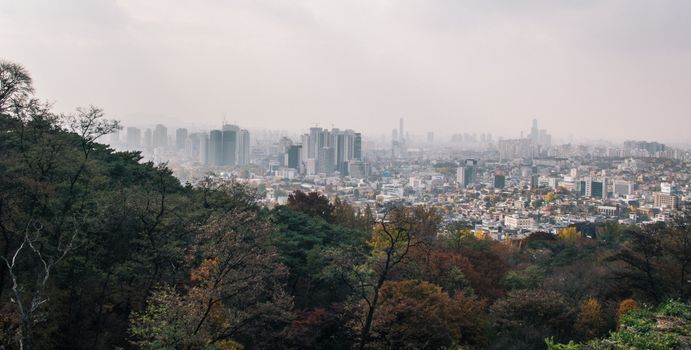
What is fine dust rhinitis?
Fine dust rhinitis is an irritant, non-allergic inflammation of the nasal lining triggered by particulate air pollution. Particulate matter is classified by size: PM10 (10 micrometers or smaller) is trapped mostly in the nose and upper airway, while PM2.5 (2.5 micrometers or smaller) can reach deep into the lungs. Particles can carry metals, combustion products and microbial material that damage the mucosal barrier and slow the cleaning action of nasal cilia.
In Korea, yellow dust (hwangsa) storms carry mineral dust from desert regions, mainly in spring, while fine dust episodes from combustion and industrial sources often peak in late autumn, winter and early spring.
Symptoms
- Sneezing and a runny nose on high-pollution days
- Nasal congestion, dryness or burning
- Postnasal drip and throat irritation
- Itchy, watery eyes
- Cough and hoarseness
- Worsening of existing allergy, asthma or sinus symptoms
Who is most affected?
Anyone can react, but people with allergic rhinitis, vasomotor rhinitis, chronic sinusitis or asthma are more sensitive. Particulate exposure can amplify allergic responses to pollen, which often coincides with spring yellow dust. Children, older adults, outdoor workers and newcomers to Seoul who are not used to these seasonal episodes may notice symptoms most.
How it is diagnosed at our Gangnam clinic
The diagnosis is based on symptoms linked to poor air quality days. Dr. Kim examines the nasal lining with nasal endoscopy and may recommend an allergy test to see whether an allergy such as dust mites or pollen is also contributing. Identifying a coexisting allergy is important because it changes treatment. If symptoms persist after air quality improves, he checks for sinusitis or other causes.
Prevention and treatment
Practical protection
- Check the daily fine dust forecast on Korean air quality apps and plan outdoor activity accordingly
- Wear a properly fitted KF94 or KF80 mask on high-pollution days
- Keep windows closed during episodes and use an air purifier with a HEPA filter
- Wash your face and hands after returning home
- Stay hydrated to keep the mucosa moist
Medical care
- Saline nasal irrigation after outdoor exposure to rinse away particles
- Intranasal corticosteroids for persistent inflammation and congestion
- Antihistamines when sneezing, itching or allergy are prominent; see allergic rhinitis medication
- Better control of underlying asthma or allergy
Persistent structural blockage, such as enlarged turbinates, can be evaluated separately, but surgery is not a treatment for pollution exposure itself.
When to see an ENT
See an ENT if nasal or throat symptoms persist for more than two weeks, recur every pollution season, or interfere with sleep and work. Seek prompt medical care for wheezing, shortness of breath, chest tightness or high fever.
Seeing Dr. Kim in English
Dr. Kim Yoo Suk is a rhinology subspecialist and former university professor whose research includes how airway epithelial barriers respond to stress. He helps newcomers manage Seoul's air quality seasons in English. Find us two minutes from Gangnam-gu Office Station on our location page.
Frequently asked questions
Do masks really protect my nose from fine dust?
Properly fitted KF94 or KF80 masks filter a large proportion of fine particles and reduce exposure. Fit matters: gaps around the nose and cheeks let unfiltered air in. Cloth and surgical masks offer much less protection against PM2.5.
Should I rinse my nose after a high fine dust day?
Saline irrigation after time outdoors can wash out trapped particles and mucus, and many patients find it soothing. Use sterile or boiled and cooled water with a proper saline mix, and clean the rinse bottle regularly.
Can fine dust cause sinusitis?
Particulate pollution can impair the nasal lining and mucus clearance, which may make sinus inflammation more likely or worsen existing sinusitis. Thick discolored discharge, facial pain or reduced smell lasting more than 10 days should be checked by an ENT.
Your doctor
Dr. Kim Yoo Suk, MD
Board-certified otolaryngologist (ENT). Former clinical assistant professor at Yonsei University and assistant professor at Ajou University School of Medicine. Nose & sinus subspecialist who treats all ear, nose and throat conditions.
Consultations in English. Guide for international patients →
Visit us in Gangnam
2F HS Tower, 703 Seolleung-ro, Gangnam-gu, Seoul
Gangnam-gu Office Station (Line 7 / Suin-Bundang), Exit 3-1
Mon, Tue, Thu, Fri 9:00–19:00
Wed 14:00–19:00 · Sat 9:00–14:00
Closed Sundays & public holidays
This page is general medical information written and reviewed by an ENT specialist. It is not a diagnosis. Symptoms differ between people — please see a doctor for an examination. In an emergency in Korea, call 119.