
Is Fine Dust or Yellow Dust Causing My Nose Symptoms Since Moving to Gangnam, Seoul?
Answered by Dr. Kim Yoo Suk, MD · Board-certified otolaryngologist · Former professor, Yonsei & Ajou University · Consultations in English
SHORT ANSWER
Many newcomers to Seoul develop a blocked, runny or itchy nose because of fine dust (PM2.5/PM10), spring yellow dust, new pollens, dry winter heating and indoor dust mites. These irritate the nasal lining or trigger allergies. An ENT can tell irritation from allergy with an exam and allergy test and tailor treatment.
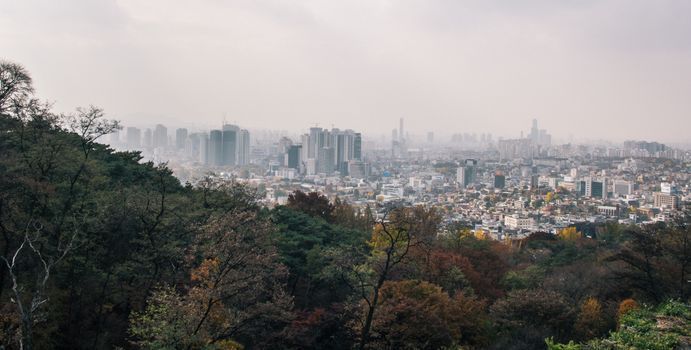
Why your nose reacts after moving to Seoul
Newcomers are often surprised to develop nasal symptoms they never had at home. Several factors overlap in Seoul:
- Fine dust (미세먼지, misemeonji): airborne particles, PM10 and the smaller PM2.5, that irritate and inflame the lining of the nose and airways.
- Yellow dust (황사, hwangsa): mineral dust blown from continental deserts, mainly in spring, often carrying pollutants.
- New pollens: tree pollen in spring and weed pollen in late summer and autumn.
- House dust mites: common in humid summers and in bedding year-round.
- Dry air: heated apartments and offices in winter dry the nasal lining.
The result can be fine dust rhinitis, a new or worsened allergic rhinitis, or a mix of both.
Irritation or allergy?
Irritant rhinitis tends to follow bad air-quality days, with burning, dryness and clear runny nose. Allergic rhinitis brings sneezing fits, itchy nose and eyes and a seasonal or bedroom pattern. They can feel similar, which is why testing helps. Persistent congestion with thick discharge or facial pressure may point to sinusitis instead.
What we do at Gangnam Yonsei ENT
Dr. Kim Yoo Suk is a rhinology subspecialist and member of the Korean Academy of Asthma, Allergy and Clinical Immunology as well as the Korean Rhinologic Society. He previously taught at Yonsei and Ajou University medical schools and has published research on allergic skin reactivity. He explains everything in English.
Assessment usually includes nasal endoscopy and, when allergy is suspected, an allergy test to identify triggers such as dust mites or pollens. Treatment follows the international ARIA guideline approach:
- Avoidance: practical steps for air-quality days and the home.
- Medication: steroid nasal sprays, antihistamines and other allergic rhinitis medication.
- Immunotherapy: for confirmed dust mite allergy, sublingual immunotherapy can reduce sensitivity over time.
- Surgery: only when enlarged turbinates or a deviated septum keep the nose blocked despite good medical care.
Practical tips for fine dust days
- Check air quality apps; KF80 or KF94 masks filter fine particles outdoors.
- Close windows on high-dust days and use an air purifier at home.
- Rinse your nose with saline after time outside.
- Keep indoor humidity comfortable in winter.
- Wash bedding in hot water weekly if dust mites are a trigger.
- Avoid relying on decongestant sprays for more than a few days.
Symptoms beyond the nose
Fine dust affects the whole upper airway. Some newcomers notice a scratchy throat, a dry cough, hoarseness or postnasal drip on high-dust days, and people with asthma may find it harder to control. If you wear contact lenses, itchy, irritated eyes often accompany nasal symptoms. Mention all of these during your visit, since they help build a complete picture.
When to see an ENT
Come in if symptoms last more than a couple of weeks, disturb your sleep, cause snoring, or come with facial pain, nosebleeds, wheezing or loss of smell. Wheezing or shortness of breath needs prompt medical assessment. The clinic is two minutes from Gangnam-gu Office Station; see our guide for international patients.
Related questions
Do masks really help with fine dust?
Certified KF80 and KF94 masks are designed to filter fine particles and can reduce how much reaches your nose and lungs on poor air-quality days. Fit matters: the mask should seal around the nose and chin to work properly.
Will my symptoms go away once I adjust?
Irritant symptoms often fluctuate with air quality rather than disappearing. Allergies, once developed, tend to persist without treatment. Testing clarifies which you have, and Dr. Kim can recommend a plan that fits life in Seoul.
Can fine dust cause sinus infections?
Fine dust inflames the nasal lining and can impair the normal clearing of mucus, which may contribute to sinus problems in some people. Facial pain, thick discharge or symptoms lasting over 10 days warrant an ENT examination.
Your doctor
Dr. Kim Yoo Suk, MD
Board-certified otolaryngologist (ENT). Former clinical assistant professor at Yonsei University and assistant professor at Ajou University School of Medicine. Nose & sinus subspecialist who treats all ear, nose and throat conditions.
Consultations in English. Guide for international patients →
Visit us in Gangnam
2F HS Tower, 703 Seolleung-ro, Gangnam-gu, Seoul
Gangnam-gu Office Station (Line 7 / Suin-Bundang), Exit 3-1
Mon, Tue, Thu, Fri 9:00–19:00
Wed 14:00–19:00 · Sat 9:00–14:00
Closed Sundays & public holidays
This answer is general medical information written and reviewed by an ENT specialist. It is not a diagnosis. Please see a doctor for an examination. In an emergency in Korea, call 119.