
Cephalogram Airway X-ray for Snoring in Gangnam, Seoul
Medically reviewed by Dr. Kim Yoo Suk, MD · Board-certified otolaryngologist · Former professor, Yonsei & Ajou University · Consultations in English
QUICK ANSWER
A cephalogram is a standardized side-view X-ray of the head and neck that measures jaw position and the width of the airway behind the palate and tongue. At Gangnam Yonsei ENT in Gangnam, Seoul, it is part of the snoring and sleep apnea workup, helping Dr. Kim Yoo Suk identify where the airway narrows.
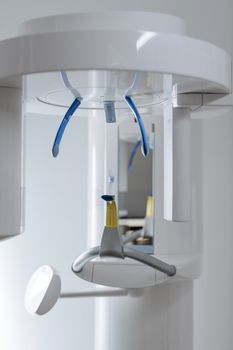
What is a cephalogram?
A lateral cephalogram, often called a ceph or cephalometric X-ray, is a profile radiograph of the skull, face and upper neck taken with the head in a fixed, reproducible position. Specialists trace landmarks on the image to measure relationships between the skull base, upper jaw (maxilla), lower jaw (mandible), hyoid bone, soft palate and tongue. In sleep medicine, the key measurement is the posterior airway space, the width of the airway behind the soft palate and the tongue base.
What it can show
- A retruded (set-back) lower jaw, which pushes the tongue toward the throat
- A long, thick soft palate
- A narrow airway behind the tongue base
- A low-positioned hyoid bone, associated with airway collapse
Who is it for?
A cephalogram is useful for adults with:
- Habitual snoring
- Suspected or confirmed obstructive sleep apnea
- People considering an oral appliance or snoring surgery, where jaw and tongue anatomy affect the choice
In children with mouth breathing, a side X-ray can also show enlarged adenoids.
How it is done at our Gangnam clinic
The clinic's snoring and sleep apnea evaluation, as described in its source materials, combines cephalogram, CT, endoscopy and polysomnography. Dr. Kim Yoo Suk, a board-certified otolaryngologist and former Ajou University assistant professor who published research on five-year outcomes of sleep apnea surgery, uses the cephalogram alongside a direct look at the nose and throat with endoscopy.
- You stand or sit with your head held in a positioning device and teeth gently together.
- A single side-view X-ray is taken in seconds.
- Dr. Kim reviews the measurements and explains in English how your anatomy may contribute to snoring.
When significant sleep apnea is suspected, a sleep study is recommended to measure severity, since an X-ray cannot tell how often breathing stops at night.
After the test
No recovery time is needed. The cephalogram results help match treatment to your anatomy, for example nasal surgery, palatal or tongue base procedures, an oral appliance that advances the lower jaw, or CPAP. Lifestyle factors such as weight, alcohol and sleep position are considered alongside.
Risks and limitations
A cephalogram uses a low dose of radiation. Its main limitation is that it is taken while you are awake and upright, whereas airway collapse happens lying down during sleep with relaxed muscles. It is therefore one piece of the picture, not a stand-alone diagnosis. Tell staff if you might be pregnant. See a doctor promptly if you have witnessed breathing pauses, gasping at night or dangerous daytime sleepiness.
Practical information for foreign patients
All findings are explained in English, and image copies and an English medical certificate are available. Learn more about Dr. Kim or see location and hours near Gangnam-gu Office Station.
Frequently asked questions
Why does an ENT take a head X-ray for snoring?
A cephalogram shows jaw position, palate length and airway width behind the tongue. These features help explain why snoring occurs and guide whether nasal treatment, palatal surgery, an oral appliance or CPAP is likely to help.
Is a cephalogram enough to diagnose sleep apnea?
No. A cephalogram shows anatomy while you are awake. Diagnosing sleep apnea requires a sleep study that records breathing, oxygen levels and sleep during the night. The two tests complement each other.
Is the radiation dose from a cephalogram high?
No. A cephalogram is a single plain X-ray with a low radiation dose. As with any imaging, it is used only when it adds useful information. Inform the staff if you are or might be pregnant.
Your doctor
Dr. Kim Yoo Suk, MD
Board-certified otolaryngologist (ENT). Former clinical assistant professor at Yonsei University and assistant professor at Ajou University School of Medicine. Nose & sinus subspecialist who treats all ear, nose and throat conditions.
Consultations in English. Guide for international patients →
Visit us in Gangnam
2F HS Tower, 703 Seolleung-ro, Gangnam-gu, Seoul
Gangnam-gu Office Station (Line 7 / Suin-Bundang), Exit 3-1
Mon, Tue, Thu, Fri 9:00–19:00
Wed 14:00–19:00 · Sat 9:00–14:00
Closed Sundays & public holidays
Related pages
This page is general medical information written and reviewed by an ENT specialist. It is not a diagnosis or a guarantee of results; every treatment carries risks, and suitability is decided only after an examination. In an emergency in Korea, call 119.