
Epley Maneuver for BPPV Vertigo in Gangnam, Seoul
Medically reviewed by Dr. Kim Yoo Suk, MD · Board-certified otolaryngologist · Former professor, Yonsei & Ajou University · Consultations in English
QUICK ANSWER
The Epley maneuver is a sequence of guided head and body movements that moves displaced inner ear crystals out of the semicircular canal causing BPPV vertigo. At Gangnam Yonsei ENT in Gangnam, Seoul, Dr. Kim Yoo Suk confirms the affected canal with Frenzel goggles and performs the appropriate repositioning maneuver, explained in English.
What is the Epley maneuver?
Benign paroxysmal positional vertigo (BPPV) occurs when tiny calcium carbonate crystals (otoconia) detach from the utricle in the inner ear and drift into one of the semicircular canals. When the head moves, the crystals shift and send a false spinning signal to the brain. The Epley maneuver is a canalith repositioning procedure: a series of head positions, each held for a short time, that uses gravity to guide the crystals out of the posterior semicircular canal and back into the utricle, where they no longer cause symptoms.
Other repositioning maneuvers
BPPV can involve different canals. The posterior canal is most commonly affected and is treated with the Epley maneuver. Horizontal (lateral) canal BPPV needs different techniques, such as the barbecue roll or Gufoni maneuver. Identifying the correct canal is essential for choosing the right maneuver.
Who is it for?
Repositioning is for people diagnosed with BPPV, whose typical symptoms include:
- Brief spinning, usually less than a minute, triggered by rolling over in bed, lying down, getting up, or looking up
- Nausea during episodes
- Unsteadiness between episodes
- Normal hearing, unlike conditions such as Meniere's disease
How it is done at our Gangnam clinic
Dr. Kim Yoo Suk is a board-certified otolaryngologist and former Yonsei and Ajou university faculty member who treats all ear conditions, including dizziness and vertigo. The clinic uses Frenzel goggles for diagnosis, as described in its source materials.
- Diagnosis: a Frenzel goggle dizziness test with positional maneuvers identifies the affected ear and canal from the pattern of nystagmus.
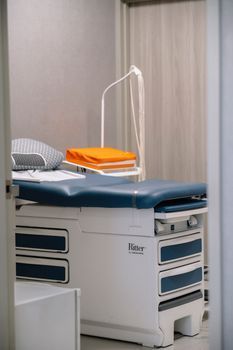
- Repositioning: Dr. Kim guides your head through a series of positions on the examination bed. Each position is held while any vertigo settles.
- Recheck: positional testing may be repeated to see if nystagmus has resolved; additional rounds can be done if needed.
The maneuver takes only a few minutes, and many patients feel improvement after one or two sessions, though some need repeat visits.
Aftercare
- Rest briefly before leaving; some unsteadiness or mild residual dizziness is common for a day or two.
- Avoid driving if you feel unsteady.
- Follow any specific positioning advice given for the following days.
- Return if symptoms persist or recur; BPPV can come back, sometimes months or years later.
Risks and limitations
The maneuver may briefly trigger strong vertigo and nausea. People with significant neck or back problems, certain vascular conditions, or recent head injury may need modified techniques. Repositioning only treats BPPV; it will not help vestibular neuritis or other causes. Go to an emergency room immediately if dizziness comes with sudden severe headache, double vision, slurred speech, weakness, numbness or trouble walking.
Practical information for foreign patients
Vertigo can strike suddenly while traveling. Because it is easily treatable, getting the correct diagnosis quickly helps you get back to your plans. Dr. Kim explains each step in English, and an English medical certificate can be issued. Consider a taxi to the clinic if you feel unsteady. See location and hours, the ear clinic, and Dr. Kim's profile.
Frequently asked questions
How quickly does the Epley maneuver work?
Many people feel significantly better after one session, and most improve within one or two sessions. Some residual unsteadiness may last a few days. If vertigo persists, the diagnosis and affected canal are rechecked, and the maneuver may be repeated.
Can I do the Epley maneuver at home?
Home versions exist, but performing the wrong maneuver for the wrong ear or canal can be ineffective. A proper diagnosis with Frenzel goggle testing is recommended first. Dr. Kim can advise whether home exercises are appropriate for you.
Will BPPV come back after treatment?
BPPV can recur, sometimes months or years later, and recurrence is fairly common. If the same positional spinning returns, it is usually treatable again with repositioning. Seek a new evaluation if symptoms differ from before.
Your doctor
Dr. Kim Yoo Suk, MD
Board-certified otolaryngologist (ENT). Former clinical assistant professor at Yonsei University and assistant professor at Ajou University School of Medicine. Nose & sinus subspecialist who treats all ear, nose and throat conditions.
Consultations in English. Guide for international patients →
Visit us in Gangnam
2F HS Tower, 703 Seolleung-ro, Gangnam-gu, Seoul
Gangnam-gu Office Station (Line 7 / Suin-Bundang), Exit 3-1
Mon, Tue, Thu, Fri 9:00–19:00
Wed 14:00–19:00 · Sat 9:00–14:00
Closed Sundays & public holidays
Related pages
This page is general medical information written and reviewed by an ENT specialist. It is not a diagnosis or a guarantee of results; every treatment carries risks, and suitability is decided only after an examination. In an emergency in Korea, call 119.