
Dental Implant & Tooth-Related Sinusitis in Gangnam, Seoul
Medically reviewed by Dr. Kim Yoo Suk, MD · Board-certified otolaryngologist · Former professor, Yonsei & Ajou University · Consultations in English
QUICK ANSWER
Dental implant sinusitis is maxillary sinus infection caused by an upper tooth problem, implant or sinus lift graft. Typical signs are one-sided foul-smelling discharge and cheek pain that keeps returning after antibiotics. Effective treatment addresses both the dental source and the sinus, often combining dental care with endoscopic sinus surgery.
What is dental implant (odontogenic) sinusitis?
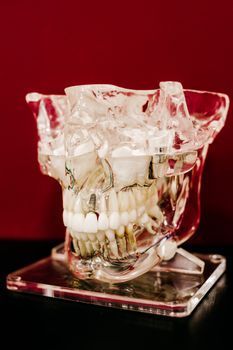
Odontogenic sinusitis is inflammation of the maxillary sinus that originates from the teeth or dental procedures. The roots of the upper molars and premolars sit just below, and sometimes inside, the floor of the maxillary sinus. Infection, implant threads or bone graft material can therefore breach the thin bony barrier and contaminate the sinus.
It accounts for a meaningful share of one-sided maxillary sinusitis and is often missed when treated as ordinary chronic sinusitis.
Symptoms
- One-sided nasal discharge, often foul-smelling or foul-tasting
- Cheek pain or pressure on the same side as the dental work
- Nasal blockage on one side
- Bad breath or a bad smell only the patient notices
- Symptoms that improve on antibiotics and return when they stop
Interestingly, the tooth itself may not hurt.
Causes
- Periapical infection or periodontal disease of an upper back tooth
- Dental implant protruding into the sinus or failing to integrate
- Sinus lift (sinus augmentation) graft infection or graft material leaking into the sinus
- An oroantral fistula, an opening between mouth and sinus after extraction
- Root canal material extruded into the sinus, which can also favor a fungus ball (see fungal sinusitis)
How it is diagnosed at our Gangnam clinic
Dr. Kim examines the middle meatus with nasal endoscopy to look for pus draining from the maxillary sinus. A sinus CT scan is essential: it shows the relationship between roots, implants or graft material and the sinus floor, and whether the sinus outflow tract is blocked. We ask you to bring dental X-rays and implant records, including those from clinics abroad.
Treatment options
Successful treatment usually requires managing both sides of the problem.
Dental source
Your dentist may treat the infected tooth, perform root canal treatment, extract the tooth, close a fistula or, in some cases, remove a failed implant or infected graft. We coordinate with your dentist on the order of treatment.
Sinus treatment
Antibiotics that cover oral bacteria and saline irrigation are used initially. When infection persists, foreign material is present, or the sinus remains blocked, endoscopic sinus surgery opens the maxillary sinus through the nose to clear pus, graft particles or fungal debris. Many implants can be preserved when they are stable and the sinus is cleared, but this depends on the individual case.
At our clinic, sinus surgery is performed under local anesthesia with same-day discharge for most patients. Absorbable packing stays for one day, and antibiotics continue for about a week.
When to see an ENT
Ask for an ENT assessment if sinus symptoms appear weeks or months after implant or sinus lift surgery, or if one-sided sinusitis keeps returning. Seek urgent care for swelling around the eye, vision changes or high fever.
Seeing Dr. Kim in English
Many expats and visitors have dental implant work done in Seoul. Dr. Kim Yoo Suk, a former university professor specializing in sinus disease, can review your images and explain options in English. Copies of records and an English medical certificate are available; read our international patient guide.
Frequently asked questions
Do I have to lose my dental implant?
Not always. If the implant is stable and the sinus problem is due to infection or graft material that can be cleared, the implant can often stay. A loose, failed or badly positioned implant may need removal. This decision is made jointly with your dentist.
Should I see a dentist or an ENT first?
Either is reasonable, but both are usually needed. An ENT can confirm sinus involvement with endoscopy and CT, while the dentist treats the tooth or implant. Bringing dental records to your ENT visit speeds up planning.
Why does my sinusitis keep coming back after antibiotics?
When a dental source or foreign material remains, antibiotics only suppress the infection temporarily. Until the source is treated and sinus drainage is restored, symptoms tend to return. A CT scan helps identify the reason.
Your doctor
Dr. Kim Yoo Suk, MD
Board-certified otolaryngologist (ENT). Former clinical assistant professor at Yonsei University and assistant professor at Ajou University School of Medicine. Nose & sinus subspecialist who treats all ear, nose and throat conditions.
Consultations in English. Guide for international patients →
Visit us in Gangnam
2F HS Tower, 703 Seolleung-ro, Gangnam-gu, Seoul
Gangnam-gu Office Station (Line 7 / Suin-Bundang), Exit 3-1
Mon, Tue, Thu, Fri 9:00–19:00
Wed 14:00–19:00 · Sat 9:00–14:00
Closed Sundays & public holidays
This page is general medical information written and reviewed by an ENT specialist. It is not a diagnosis. Symptoms differ between people — please see a doctor for an examination. In an emergency in Korea, call 119.