
Sinus CT Scan Evaluation in Gangnam, Seoul
Medically reviewed by Dr. Kim Yoo Suk, MD · Board-certified otolaryngologist · Former professor, Yonsei & Ajou University · Consultations in English
QUICK ANSWER
A sinus CT scan is a cross-sectional X-ray study that shows the inside of the paranasal sinuses, the nasal septum and surrounding bone in detail. At Gangnam Yonsei ENT in Gangnam, Seoul, CT is used when endoscopy and symptoms suggest deeper sinus disease or surgery is being planned, with results reviewed in English.
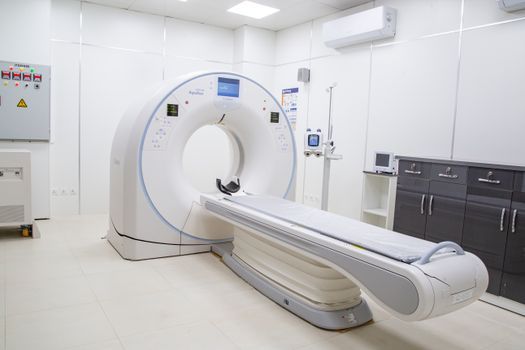
What is a sinus CT scan?
Computed tomography (CT) of the paranasal sinuses uses X-rays and computer processing to create thin slices of the face in three planes: axial, coronal and sagittal. Air appears black, bone white and soft tissue or fluid gray, so the scan clearly shows whether sinuses are clear or filled with thickened mucosa, fluid, polyps or fungal material. It also maps critical anatomy, such as the thin bone separating the sinuses from the eye socket and skull base.
Why CT rather than a plain X-ray?
Plain sinus X-rays overlap structures and miss much of the ethmoid and sphenoid sinuses. CT is the standard imaging test for chronic sinus disease and for surgical planning because it shows each sinus and its drainage pathway individually.
Who is it for?
CT is not needed for every sinus infection. It is generally considered for:
- Chronic sinusitis that persists despite appropriate treatment
- Nasal polyps or fungal sinusitis
- Odontogenic or dental implant-related sinusitis affecting the maxillary sinus
- Planning endoscopic sinus surgery or septoplasty
- Suspected tumors, complications of sinusitis, or facial trauma such as nasal fractures
How it is done at our Gangnam clinic
Dr. Kim Yoo Suk, a former Yonsei and Ajou rhinology professor trained in endoscopic sinus and skull base surgery, first examines the nose with nasal endoscopy and orders CT when the findings justify it. The scan itself is quick:
- You lie on the scanner table with your head positioned still.
- The table moves through the ring-shaped scanner over a short period.
- Contrast dye is not usually required for routine sinus imaging; it is reserved for suspected complications or tumors.
- Dr. Kim reviews the images with you, explaining which sinuses are affected and what that means for treatment.
In snoring and sleep apnea assessment, CT may also complement a cephalogram to understand nasal and airway anatomy.
After the scan
There is no recovery period. You can resume normal activities immediately. The images inform the choice between continued medical treatment, such as saline irrigation, steroid sprays or antibiotics, and surgery.
Risks and limitations
CT uses ionizing radiation. The dose for sinus imaging is relatively modest, but scans should be ordered only when they will change management, especially in children and in pregnancy. Tell the clinic if you are or might be pregnant. CT also cannot always distinguish thick mucus from polyps or tumor, so findings are interpreted together with endoscopy, and MRI may be arranged when soft-tissue detail matters. A CT taken during an acute cold can exaggerate sinus changes, which is why timing is considered.
Practical information for foreign patients
If you have previous sinus imaging from home, bring the images on a disc or as a digital file; comparing scans can avoid unnecessary repeat radiation. Copies of your images and an English medical certificate can be provided on request. Read Dr. Kim's profile and the English-speaking patient guide.
Frequently asked questions
Do I need a CT scan for a sinus infection?
Most acute sinus infections are diagnosed clinically and do not need CT. Imaging is reserved for symptoms lasting many weeks, suspected complications, polyps, tumors or surgical planning. Dr. Kim recommends CT only when it is likely to change treatment.
How much radiation is in a sinus CT?
A sinus CT involves a modest radiation dose, higher than a single plain X-ray but lower than many body CT scans. Because any radiation carries some risk, scans are performed only when clinically justified. Tell staff if you might be pregnant.
Can I get a copy of my CT images?
Yes. You can request copies of your images and reports for your records, insurance or your doctor at home. An English medical certificate can also be issued, which is helpful when continuing care after leaving Korea.
Your doctor
Dr. Kim Yoo Suk, MD
Board-certified otolaryngologist (ENT). Former clinical assistant professor at Yonsei University and assistant professor at Ajou University School of Medicine. Nose & sinus subspecialist who treats all ear, nose and throat conditions.
Consultations in English. Guide for international patients →
Visit us in Gangnam
2F HS Tower, 703 Seolleung-ro, Gangnam-gu, Seoul
Gangnam-gu Office Station (Line 7 / Suin-Bundang), Exit 3-1
Mon, Tue, Thu, Fri 9:00–19:00
Wed 14:00–19:00 · Sat 9:00–14:00
Closed Sundays & public holidays
Related pages
This page is general medical information written and reviewed by an ENT specialist. It is not a diagnosis or a guarantee of results; every treatment carries risks, and suitability is decided only after an examination. In an emergency in Korea, call 119.