
Professional Ear Cleaning in Gangnam, Seoul
Medically reviewed by Dr. Kim Yoo Suk, MD · Board-certified otolaryngologist · Former professor, Yonsei & Ajou University · Consultations in English
QUICK ANSWER
Professional ear cleaning is the removal of impacted earwax or debris from the ear canal by an ENT doctor under magnification, using suction, small instruments or irrigation. At Gangnam Yonsei ENT in Gangnam, Seoul, it is a quick office procedure, and Dr. Kim Yoo Suk explains ear care in English.
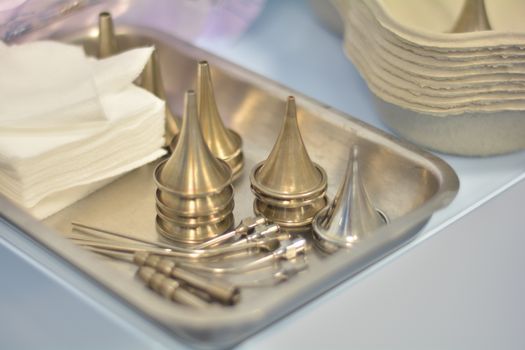
What is professional ear cleaning?
Earwax (cerumen) is a natural substance that protects and moisturizes the ear canal and usually migrates out on its own. Sometimes it builds up and blocks the canal, a condition called earwax impaction. Professional ear cleaning removes this blockage safely under direct visualization. ENT clinics typically use one or more of these methods:
- Microsuction: a fine suction tip removes wax while the doctor views the canal through a microscope or endoscope.
- Instrumentation: small curettes, loops or forceps lift out hard wax or debris.
- Irrigation: gentle flushing with body-temperature water, avoided when the eardrum may be perforated.
Softening drops may be recommended for a few days beforehand when wax is very hard.
Who is it for?
Ear cleaning may help people with:
- A blocked or full ear, muffled hearing, or ringing caused by wax
- Ear canal debris from otitis externa or swimmer's ear, where cleaning helps drops reach the skin
- Hearing aid users, whose wax tends to accumulate
- Patients who need a clear view of the eardrum for diagnosis or a hearing test
How it is done at our Gangnam clinic
Ear care is part of everyday practice for Dr. Kim Yoo Suk, a board-certified ENT and former university faculty member. Although his subspecialty is rhinology, he treats the full spectrum of ear conditions. During the visit:
- The ear canal and eardrum are examined under magnification.
- Wax or debris is removed with the method best suited to its consistency and your ear history.
- The eardrum is checked once the canal is clear, and any infection is treated.
- Dr. Kim explains home ear care in English.
The procedure usually takes only a few minutes per ear.
Aftercare and prevention
- Avoid cotton swabs, ear picks and inserting objects into the canal; they push wax deeper and can injure the skin or eardrum.
- Clean only the outer ear with a cloth.
- Ask before using ear candles, which are not recommended.
- If you are prone to buildup, periodic checks or softening drops may help.
Risks and limitations
Professional removal is safe, but minor discomfort, brief dizziness from suction noise or cool air, small skin abrasions, or rarely bleeding can occur. Irrigation is avoided if you have had an eardrum perforation or ear surgery. If muffled hearing persists after cleaning, other causes such as middle ear fluid or sensorineural loss need evaluation. Seek prompt care for sudden hearing loss, severe pain, discharge or dizziness.
Practical information for foreign patients
Blocked ears after flights, swimming or a cold are common reasons expats and visitors seek help. Walk-ins and phone calls (+82-10-5344-4464) are welcome. Ear care advice is given in English. Find directions and opening times, browse the ear clinic overview, or read about Dr. Kim Yoo Suk.
Frequently asked questions
Is it safe to clean my ears with cotton swabs?
Cotton swabs are not recommended inside the ear canal. They tend to push wax deeper, can irritate the skin and may injure the eardrum. Cleaning the outer ear with a cloth is enough for most people, as wax naturally moves outward.
Does professional earwax removal hurt?
Most patients feel little discomfort. Suction can be noisy and occasionally causes brief dizziness, and very hard wax may need softening drops first. The doctor works under magnification to minimize irritation to the delicate ear canal skin.
Why is my ear still blocked after earwax removal?
If blockage persists after the canal is clear, the cause may be middle ear fluid, Eustachian tube dysfunction or inner ear hearing loss. A hearing test and tympanometry can help identify the reason and guide treatment.
Your doctor
Dr. Kim Yoo Suk, MD
Board-certified otolaryngologist (ENT). Former clinical assistant professor at Yonsei University and assistant professor at Ajou University School of Medicine. Nose & sinus subspecialist who treats all ear, nose and throat conditions.
Consultations in English. Guide for international patients →
Visit us in Gangnam
2F HS Tower, 703 Seolleung-ro, Gangnam-gu, Seoul
Gangnam-gu Office Station (Line 7 / Suin-Bundang), Exit 3-1
Mon, Tue, Thu, Fri 9:00–19:00
Wed 14:00–19:00 · Sat 9:00–14:00
Closed Sundays & public holidays
This page is general medical information written and reviewed by an ENT specialist. It is not a diagnosis or a guarantee of results; every treatment carries risks, and suitability is decided only after an examination. In an emergency in Korea, call 119.