
Eardrum Perforation Treatment in Gangnam, Seoul
Medically reviewed by Dr. Kim Yoo Suk, MD · Board-certified otolaryngologist · Former professor, Yonsei & Ajou University · Consultations in English
QUICK ANSWER
An eardrum perforation is a hole or tear in the tympanic membrane, usually caused by infection, a slap or blast injury, pressure change or inserting objects into the ear. It causes pain, discharge and muffled hearing. Most small traumatic perforations heal within weeks if the ear is kept dry; persistent holes may need surgical repair.
What is an eardrum perforation?
An eardrum perforation, or tympanic membrane perforation, is a hole in the thin membrane that separates the ear canal from the middle ear. The eardrum vibrates with sound and protects the middle ear from water and bacteria, so a hole can affect both hearing and infection risk.
Symptoms
- Sudden sharp ear pain, sometimes followed by quick relief
- Discharge from the ear, which may be clear, pus-like or bloody
- Muffled hearing or hearing loss
- Ringing in the ear (tinnitus)
- Brief dizziness or a whistling sound when blowing the nose
Causes
- Middle ear infection: pressure from pus in acute otitis media can rupture the eardrum
- Direct injury: cotton swabs, hairpins or other objects pushed into the canal
- Pressure injury (barotrauma): flying, scuba diving or a slap to the ear
- Loud blast: explosions or very loud sudden noise
- Chronic disease: long-standing chronic otitis media
How it's diagnosed at our Gangnam clinic
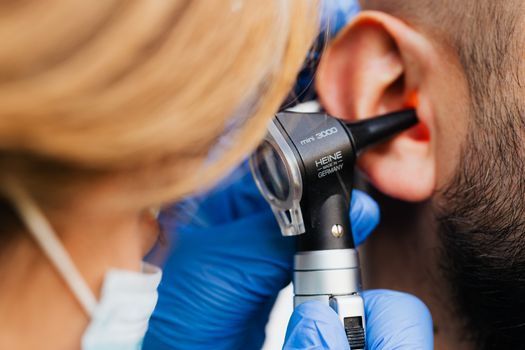
Dr. Kim examines the eardrum under magnification after gently removing any blood or discharge, assessing the size and position of the perforation. A hearing test determines whether the loss is only conductive or whether the inner ear may also have been affected, which matters after blast injury or head trauma. If you have significant dizziness, vomiting or a sudden drop in hearing, further assessment of the inner ear is needed. An English medical certificate can be issued if you need documentation, for example after an assault or workplace injury.
Treatment options
Allowing natural healing
Many small traumatic perforations heal on their own within a few weeks to a couple of months. To support healing:
- Keep the ear completely dry; no swimming, and protect it when showering
- Do not insert drops unless prescribed, and avoid cotton swabs
- Avoid forceful nose blowing
- Attend follow-up visits so healing can be confirmed
Medical treatment
If the perforation is caused by infection or the ear is discharging, antibiotic drops that are safe for an open eardrum may be prescribed, together with professional ear cleaning.
Repair
Perforations that do not close after about three months may be repaired. Small holes can sometimes be patched in the clinic, while larger or chronic perforations need tympanoplasty, a surgical repair often performed by an otology team in a hospital. Dr. Kim can advise on options and referral.
When to see an ENT
See an ENT promptly after any suspected eardrum injury. Seek urgent care if you experience severe dizziness, vomiting, a sudden large drop in hearing, facial weakness, or clear fluid after a head injury.
Seeing Dr. Kim in English
Dr. Kim Yoo Suk, board-certified in otolaryngology and formerly on faculty at Yonsei and Ajou, is a nose and sinus subspecialist who treats every type of ENT problem, including ear injuries. He explains your findings in English and provides records and receipts for insurance claims. See our international patient page for more.
Frequently asked questions
How long does a perforated eardrum take to heal?
Many small traumatic perforations heal within a few weeks to two months if the ear stays dry and infection is avoided. Larger holes, or those caused by chronic infection, may not close on their own and can need repair.
Can I fly with a perforated eardrum?
Flying is usually possible, and pressure may equalize more easily through the hole. However, discuss travel with your ENT, especially if there is infection, recent injury, dizziness or significant pain, and keep the ear dry during your trip.
Can I get an English medical certificate for an ear injury?
Yes. Gangnam Yonsei ENT can issue an English medical certificate documenting the diagnosis. This can be useful for insurance claims, employers, schools or, after an assault, legal purposes. Ask at reception when you visit.
Your doctor
Dr. Kim Yoo Suk, MD
Board-certified otolaryngologist (ENT). Former clinical assistant professor at Yonsei University and assistant professor at Ajou University School of Medicine. Nose & sinus subspecialist who treats all ear, nose and throat conditions.
Consultations in English. Guide for international patients →
Visit us in Gangnam
2F HS Tower, 703 Seolleung-ro, Gangnam-gu, Seoul
Gangnam-gu Office Station (Line 7 / Suin-Bundang), Exit 3-1
Mon, Tue, Thu, Fri 9:00–19:00
Wed 14:00–19:00 · Sat 9:00–14:00
Closed Sundays & public holidays
This page is general medical information written and reviewed by an ENT specialist. It is not a diagnosis. Symptoms differ between people — please see a doctor for an examination. In an emergency in Korea, call 119.