
Myringotomy for Middle Ear Fluid in Gangnam, Seoul
Medically reviewed by Dr. Kim Yoo Suk, MD · Board-certified otolaryngologist · Former professor, Yonsei & Ajou University · Consultations in English
QUICK ANSWER
Myringotomy is a small incision in the eardrum that drains fluid or pus from the middle ear and relieves pressure. At Gangnam Yonsei ENT in Gangnam, Seoul, it is performed under local anesthesia for selected cases of otitis media, with the procedure and aftercare explained in English by Dr. Kim Yoo Suk.
What is myringotomy?
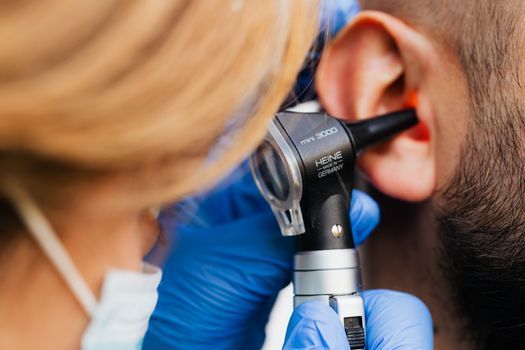
Myringotomy is a minor procedure in which the doctor makes a tiny opening in the tympanic membrane (eardrum) under microscope or endoscope guidance. Trapped fluid or pus in the middle ear can then be suctioned out, which relieves pressure, pain and muffled hearing. The small opening usually heals on its own within days to a few weeks. When longer drainage is needed, a ventilation tube (grommet) can be placed through the opening to keep the middle ear aerated. In adults, a single myringotomy is often enough, whereas recurring fluid in children more commonly leads to tube placement.
Who is it for?
Most middle ear infections resolve with observation or medication, so myringotomy is reserved for specific situations:
- Acute otitis media with severe pain or a bulging eardrum not improving on treatment
- Otitis media with effusion that persists and affects hearing
- Significant pressure symptoms from Eustachian tube dysfunction or airplane ear with fluid behind the drum
- Collecting middle ear fluid for culture when infection is unusual or resistant
How it is done at our Gangnam clinic
Dr. Kim Yoo Suk is a board-certified otolaryngologist and former Yonsei and Ajou faculty member. Although his subspecialty is rhinology, he treats the full range of ear conditions. Before any procedure, he examines the eardrum and checks middle ear function with tympanometry and a hearing test. Because the Eustachian tube opens behind the nose, he also checks the nasal cavity and nasopharynx for causes such as rhinitis, sinusitis or, in adults with one-sided fluid, a nasopharyngeal lesion.
In adults, myringotomy is typically done in the clinic chair under local anesthesia applied to the eardrum. The procedure itself takes only minutes. You can usually go home immediately.
Recovery and aftercare
- Pressure and pain often ease quickly once fluid drains.
- Some fluid or slightly bloody drainage from the ear is normal for a day or two.
- Keep water out of the ear until the doctor confirms the eardrum has healed; ask about showering and swimming.
- Antibiotic ear drops may be prescribed.
- A follow-up visit confirms closure and checks hearing.
Risks and limitations
Myringotomy is low-risk, but the opening can occasionally fail to close, leaving an eardrum perforation. Infection, recurrence of fluid and brief dizziness can also occur. Because the opening often closes within days, fluid may reaccumulate if the underlying cause persists; treating that cause is part of the plan. Seek prompt care for severe pain, high fever, facial weakness or spinning dizziness.
Practical information for foreign patients
Many expats and travelers develop ear pressure after flights or colds. Ask before flying again after a myringotomy. Consultation is in English, and the clinic is near Gangnam-gu Office Station Exit 3-1. See hours and directions, the ear clinic overview and Dr. Kim's profile.
Frequently asked questions
Does myringotomy hurt?
The eardrum is numbed beforehand, so most adults feel brief pressure or a pop rather than sharp pain. Many patients notice relief soon after because the trapped fluid causing pressure is drained. Mild soreness afterward usually settles quickly.
Can I fly after a myringotomy?
Flying is often possible because the opening equalizes pressure, but individual factors matter, including infection and nasal congestion. Discuss your travel plans with Dr. Kim so he can advise you based on how your ear looks at follow-up.
Is myringotomy the same as ear tubes?
Not quite. Myringotomy is the incision that drains fluid. Ear tubes are small ventilation tubes placed through that incision to keep it open longer when fluid keeps returning. Some patients need only myringotomy, others need tubes.
Your doctor
Dr. Kim Yoo Suk, MD
Board-certified otolaryngologist (ENT). Former clinical assistant professor at Yonsei University and assistant professor at Ajou University School of Medicine. Nose & sinus subspecialist who treats all ear, nose and throat conditions.
Consultations in English. Guide for international patients →
Visit us in Gangnam
2F HS Tower, 703 Seolleung-ro, Gangnam-gu, Seoul
Gangnam-gu Office Station (Line 7 / Suin-Bundang), Exit 3-1
Mon, Tue, Thu, Fri 9:00–19:00
Wed 14:00–19:00 · Sat 9:00–14:00
Closed Sundays & public holidays
This page is general medical information written and reviewed by an ENT specialist. It is not a diagnosis or a guarantee of results; every treatment carries risks, and suitability is decided only after an examination. In an emergency in Korea, call 119.